

CLT Timber as a Strategy for Efficient, Sustainable and Regenerative Construction
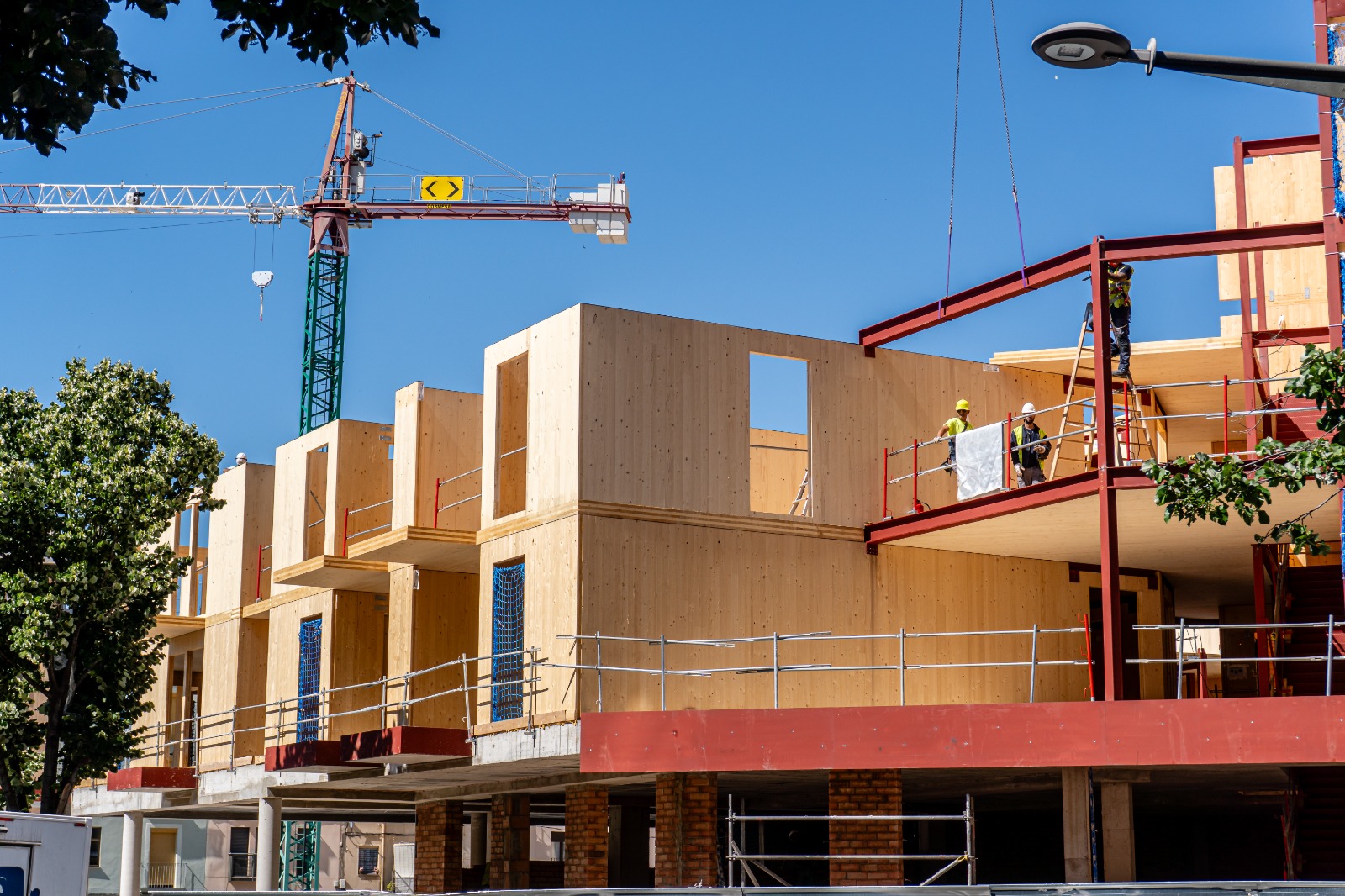
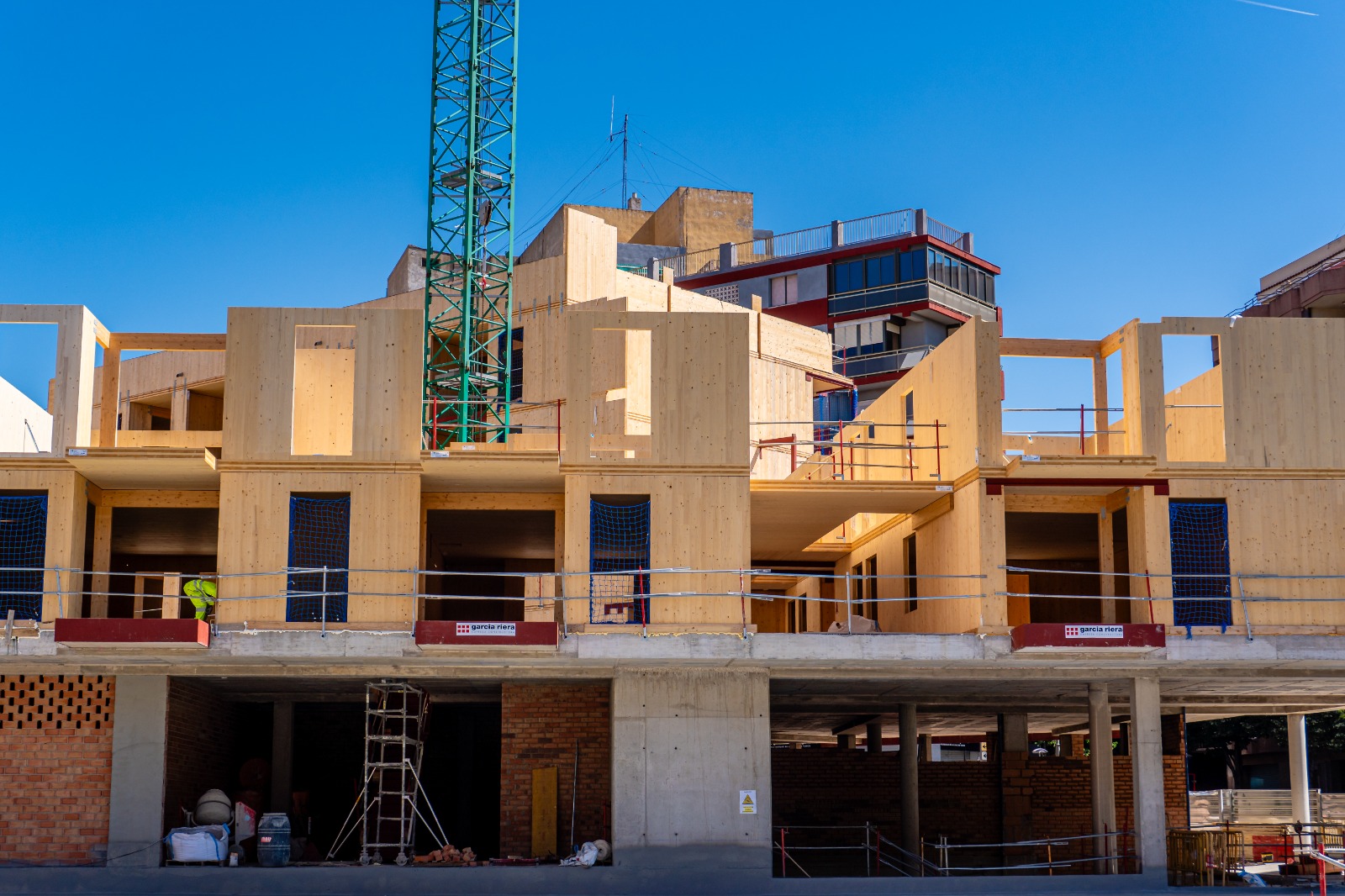
At Garcia Riera, we’re developing a project that showcases how timber can become the structural core of buildings that are environmentally friendly, efficient, and designed for the future.
In this article, we explain how we work with Cross Laminated Timber (CLT) and why it represents a smart, forward-thinking construction strategy.
What is CLT Timber?
CLT (Cross Laminated Timber) is an engineered wood product made of layered timber boards glued together at right angles. This structure enhances stability, strength and energy performance.
Since it’s prefabricated and industrialised, it ensures fast, precise assembly and significantly reduces waste on site.
Key benefits of building with CLT
- Lower environmental impact
CLT is a renewable, recyclable material with a far smaller carbon footprint than concrete or steel. Moreover, timber captures CO₂ during growth, making it a powerful ally against climate change.
- Cleaner and more efficient construction sites
Thanks to prefabrication, projects with CLT feature shorter construction times and less dust and noise, resulting in a cleaner, more controlled process — especially valuable in dense urban areas.
- Superior thermal and acoustic performance
CLT’s design and the natural properties of wood provide excellent insulation, improving both thermal comfort and soundproofing inside the homes.
A hybrid structural solution: concrete and timber
In our current project, we apply a hybrid system:
- Reinforced concrete in basement and ground floor
- CLT panels in upper levels
This strategy combines the strength and durability of concrete with the lightweight, sustainable advantages of CLT, delivering a balanced and efficient solution.
Why CLT is the future of construction
CLT construction is not a passing trend — it’s a structural and environmental shift. It answers the current challenges of the construction sector: sustainability, speed, and urban adaptability.
It also supports circular economy principles and fosters urban regeneration through smarter, greener design.
A real-world project building the future
Our current development proves that timber can evolve from a decorative element into the backbone of sustainable architecture.
Timber is not just a material — it’s a statement of the future.


